
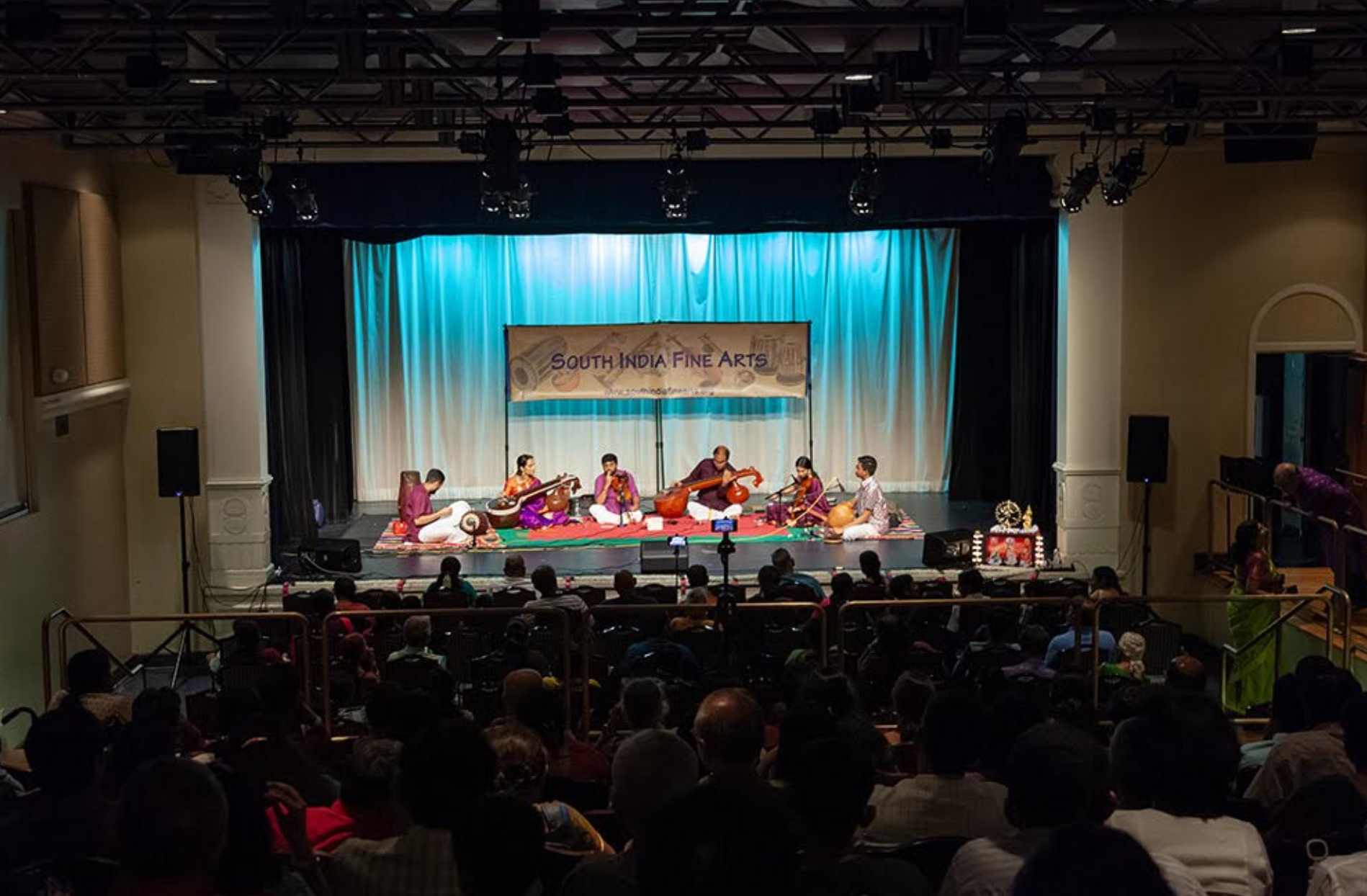
For much of its 47-year history, South India Fine Arts has brought prominent musicians and dancers to Bay Area audiences. For Lalithakala Vaibhavam, held on August 8 and 9, SIFA looked closer to home.
The inaugural festival featured Bay Area artistes in Bharatanatyam, Carnatic vocal and instrumental music, ensemble presentations and Harikatha. A Carnatic music quiz brought younger rasikas into the proceedings as participants rather than spectators.
With four programmes each day, the schedule also required some practical calculation: which performances to attend, when to meet friends and when exactly one could make the coffee run without missing too much.
A weekend of varied programmes
Saturday opened with Binaries in Bharatanatyam, presented by Sukanya Kumar and team. It was followed by Pancha Tattva, a collaborative dance production by Meenakshi Ganesan and Sudha Krishnan with a live orchestra.
Sindhu Natarajan presented the afternoon vocal concert. Later, Vadhya Vrinda brought Hrishikesh and Priyanka Chary on veena together with Vignesh and Aparna Thyagarajan on violin. The ensemble format placed the emphasis on musical exchange, with the artistes listening and responding to one another.
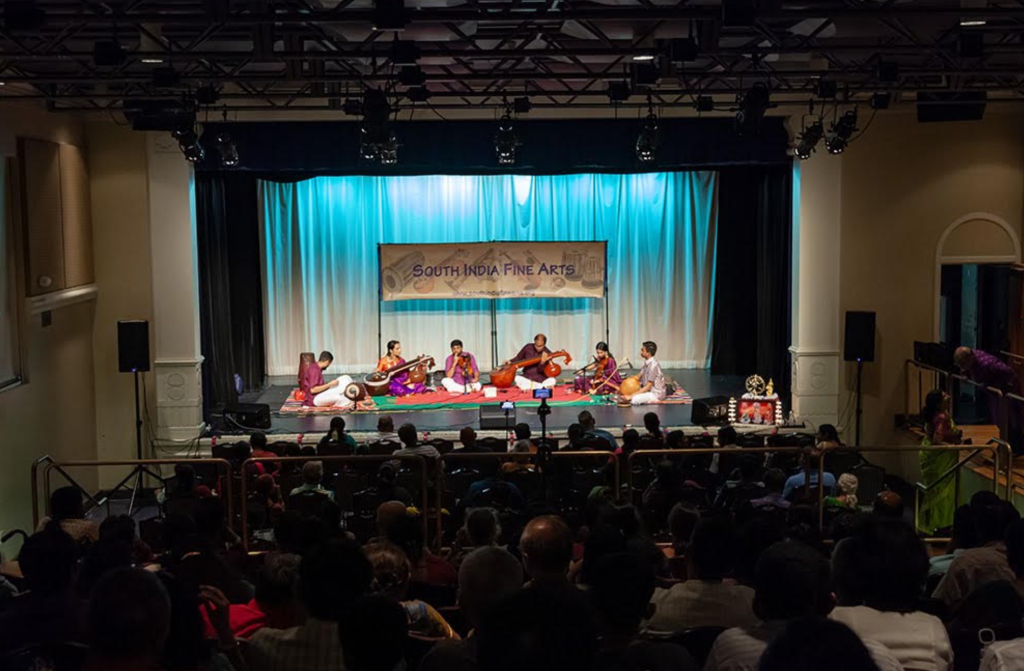
Sunday began with Sadākṣarī — The Singing Strings, presented by the Trinity School of Music and curated by Anuradha Sridhar. Performing alongside six of her students, Sridhar allowed their individual musical personalities to emerge while maintaining the coherence of the ensemble.
Festival sponsors Sudha Pennathur and Edward Messerly were among those in the audience and T.S. Ranganathan of GIRI, Sunnyvale were in the audience.
All were struck by the lives behind the music. Many of the younger artistes continue to study and practise while pursuing demanding academic and professional careers. Their presence on stage represented years of lessons, rehearsals and careful scheduling around the rest of life.
The morning continued with Glory of Dikshitar, presented by students of the International Academy of Indian Music and curated by Shiv Kumar Bhat and Kasthuri Shivakumar.
The afternoon vocal concert featured Anil Narasimha, accompanied by his brother Ajay Narasimha on violin, Gopal Ravindhran on mridangam and Karthik Balakrishnan on tambura. The programme included Tattvamariya Tarama, Saketa Nagara Natha, Eti Janmamu and Nikelana. The familiarity between the brothers lent an ease to the musical exchanges, with Ajay’s violin responding closely to Anil’s singing. Gopal provided the rhythmic framework on mridangam.
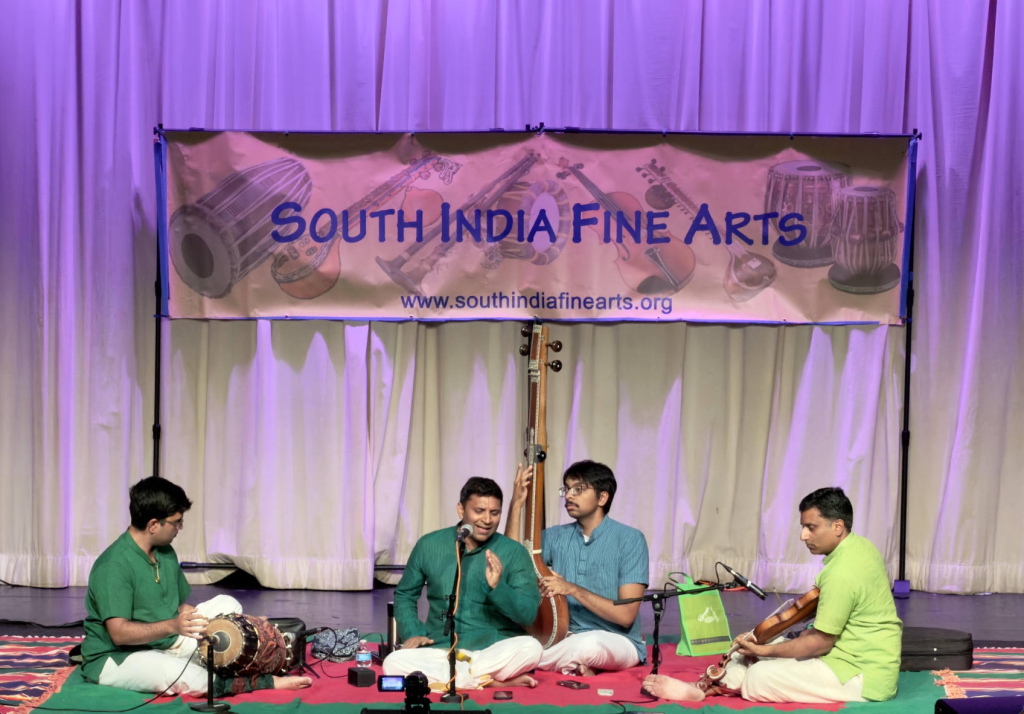
The festival concluded with Anuradha Suresh’s Harikatha, Narayananey Namakke Parai Tharuvan. The combination of music and storytelling gave the weekend an appropriately conversational close.
When young rasikas became contestants
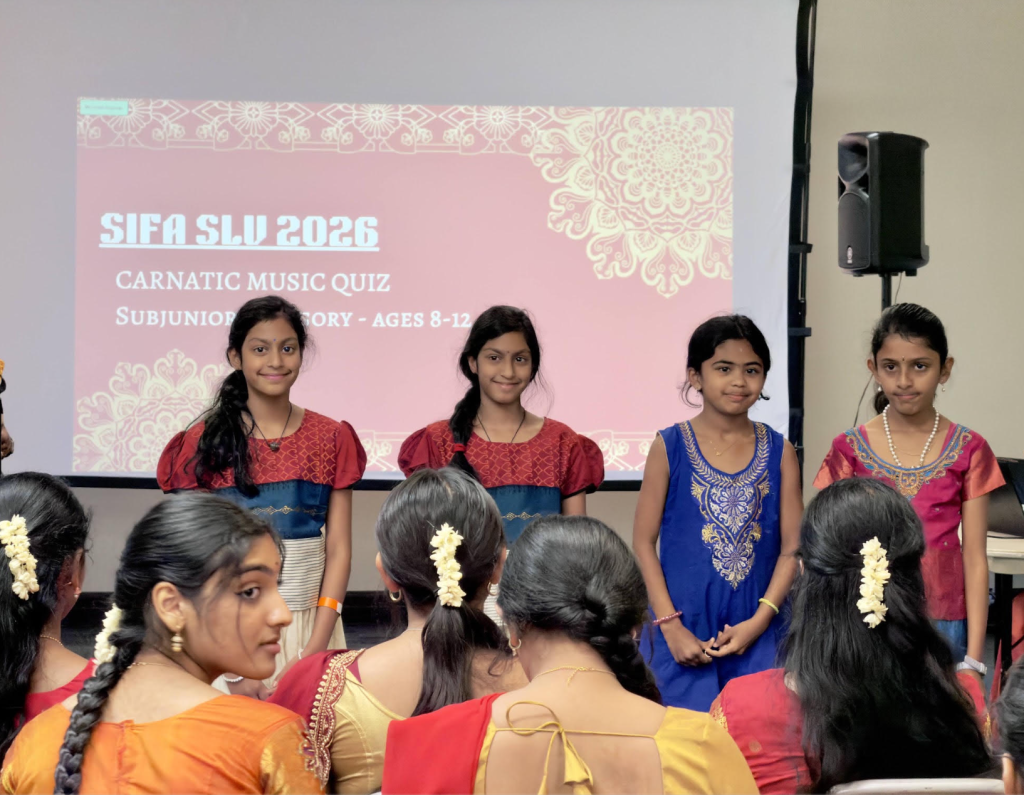
A Carnatic music quiz added a participatory element to the festival, with categories including a sub-junior round for children aged eight to 12.
For a while, the younger members of the community were not simply listening to the arts; they were being asked what they knew about them.
The quiz offered a change of pace between the formal performances and encouraged children to draw upon what they had learned through lessons, concerts and conversations at home. It also confirmed that enthusiasm sometimes reaches the answer a few seconds before certainty does.
Enthusiasm sometimes reaches the answer a few seconds before certainty does.
Beyond the programme sheet
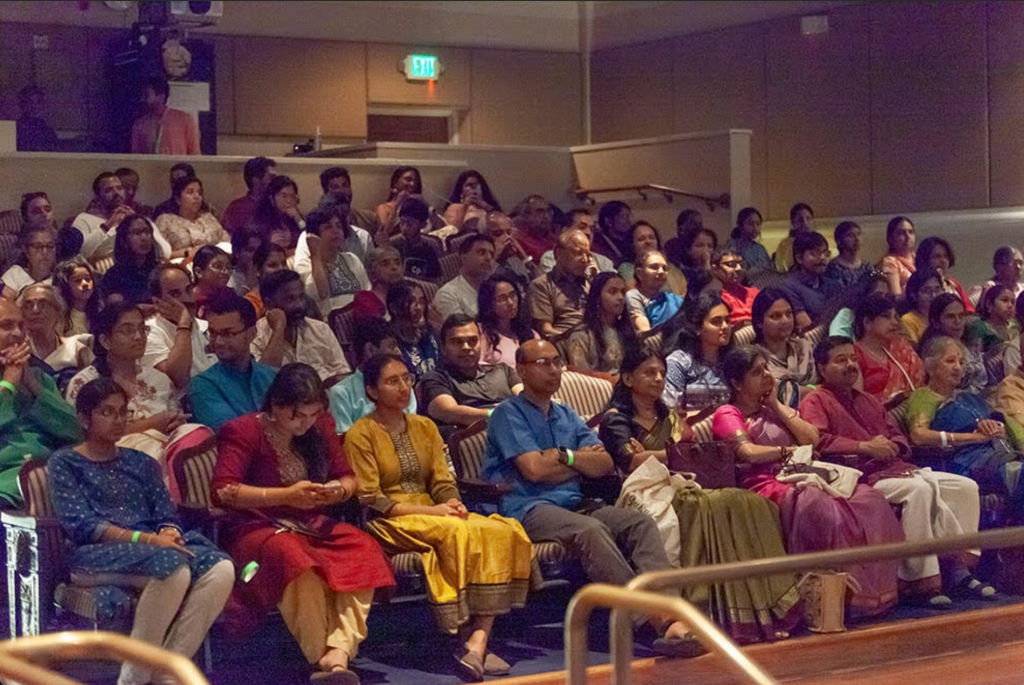
Around the theatre, the intervals developed a rhythm of their own. Artistes prepared for their slots, volunteers managed transitions and audience members moved between the hall and lobby. Friends met after months of promising to do so, and discussions about one performance continued as the next group prepared backstage.
Lalithakala Vaibhavam was not a student showcase in the conventional sense. Its participants included young learners, experienced local artistes, teachers and professionals who have continued their artistic practice alongside other careers.
This range allowed audiences to see the teaching networks that have developed across the Bay Area. It also placed artistes from different schools and circles on a common platform.
Sudha Pennathur, and T S Ranganathan, described the younger participants as future custodians of an inherited cultural tradition. Their progress depended not only on continued learning but also on a community willing to listen.
A beginning close to home
SIFA has featured local artistes alongside visiting performers over the years. Lalithakala Vaibhavam gave the local community an entire weekend.
Its breadth was its strength, even if the full schedule demanded some planning from audiences. Dance, individual concerts, teacher-student ensembles, instrumental collaboration, storytelling and a quiz all found space within the first edition.
Future editions may change in format and scale. The inaugural festival nevertheless established a clear purpose: to give Bay Area artistes a serious platform and bring them before audiences beyond their immediate schools and social circles.
By Sunday evening, the instruments had been packed and the stage cleared. What remained was a clearer view of the artistes already learning, teaching and performing among us.
Photographs by Sundar Narayanan.