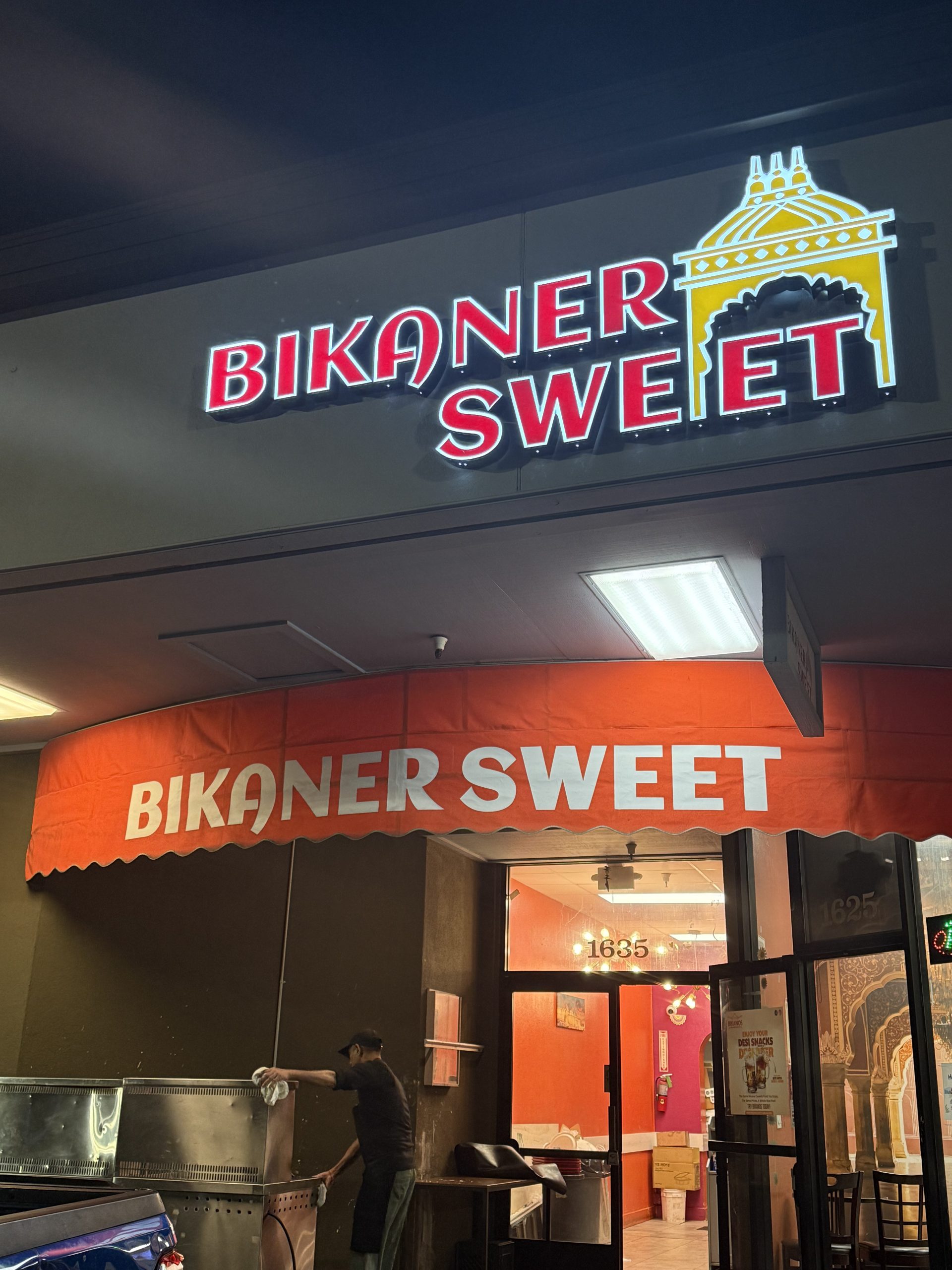
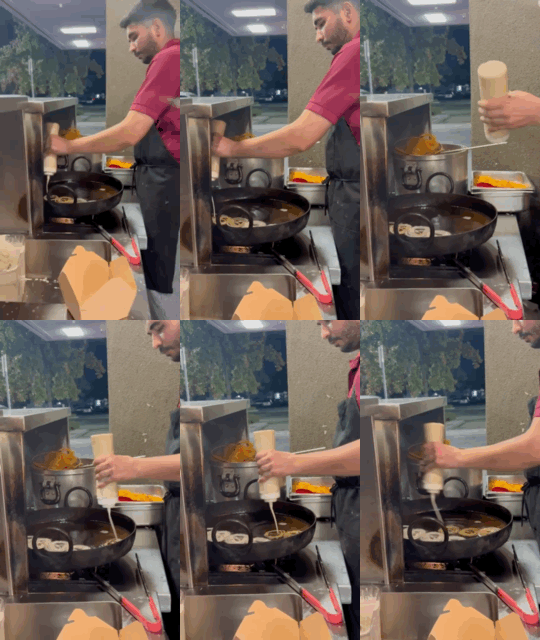
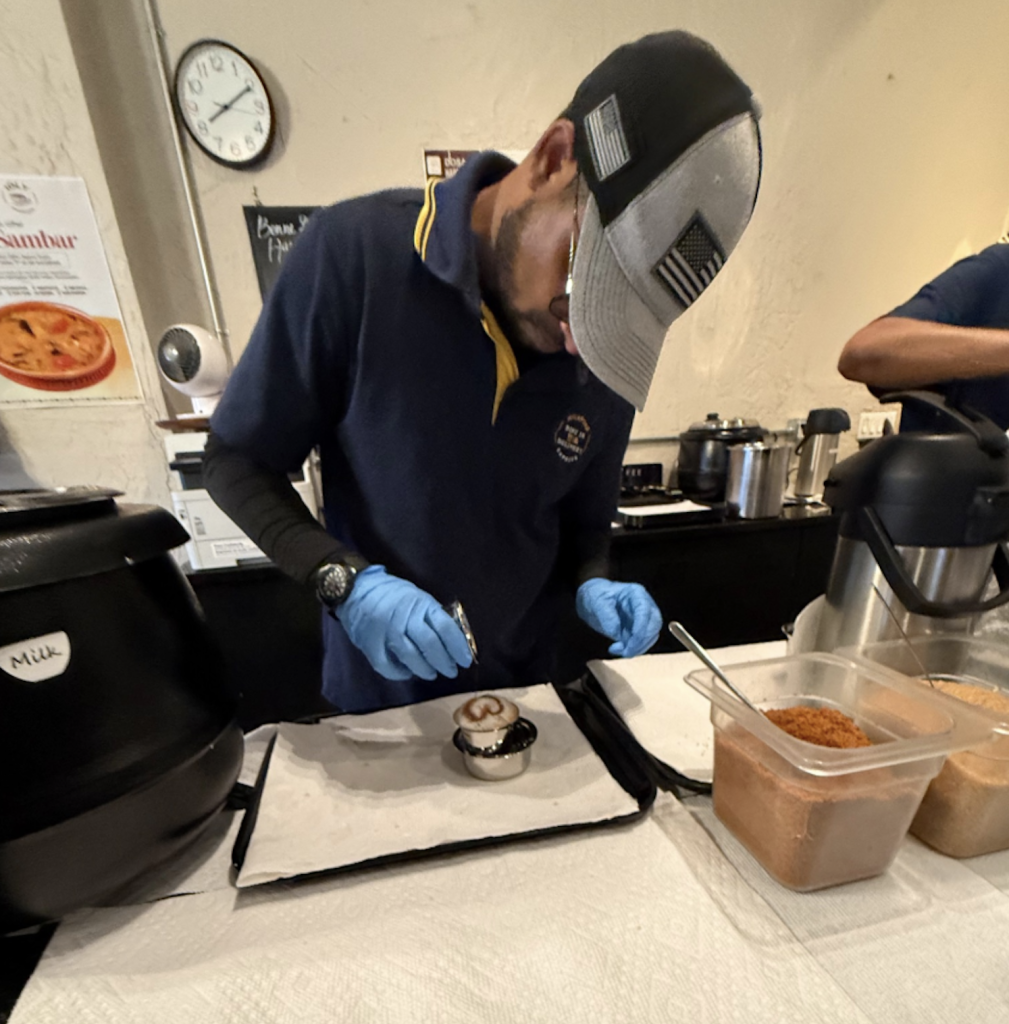
The first chilly evening of the season brought us to Bikano’s, where something hot and sticky was attracting attention at the counter. The jalebis were being made fresh.
Batter flowed into the oil in quick circles, guided by a steady hand. Each pale spiral turned golden before being lifted and lowered into warm sugar syrup. We watched respectfully.
There is something difficult to resist about a jalebi being made in front of you. Perhaps it is the heat. Perhaps it is the syrup. Perhaps it is the confidence with which it displays every curve.
BETTER IN EXPERIENCED HANDS
Jalebi appears simple when someone else makes it. There is batter, hot oil and syrup. The cook pipes a few effortless circles, waits briefly and lifts out something crisp, golden and suspiciously perfect.
This can give an ordinary person ideas. At home, the piping bottle emerges. Everyone is asked to stand back. The first attempt resembles California. The second refuses to separate from the pan. By the third, the family moves from the kitchen and makes jokes.
Hmph. some pleasures are better left in experienced hands. (The piping bottle may return to storage.)
INTENDED… FOR HOME! Fresh jalebi can be packed neatly into a box and taken home…That is the official plan. The difficulty is that warm jalebi has very little respect for long-term commitments. The outside is still crisp, the syrup is still warm, and the aroma follows you towards the car. One piece is opened for “checking”. A second is needed to confirm things. By the time the box reaches home, it is done.
HOW DO YOU LIKE YOURS? Some like it hot and crisp, directly from the syrup. Some want it with chai. Others add rabri, having decided that restraint has already left the conversation. Then there are people who prefer jalebi after it has softened slightly. (They deserve the same kindness as everyone else.)
At Bikano’s, the pleasure begins before the first bite. Watching each spiral take shape is part of the experience. The video loops neatly, allowing viewers to revisit the moment when batter meets oil and good intentions begin to weaken.
The first chill is here. Winter preparations are going well. We have located the hot jalebis and plan to maintain a close professional interest until spring.
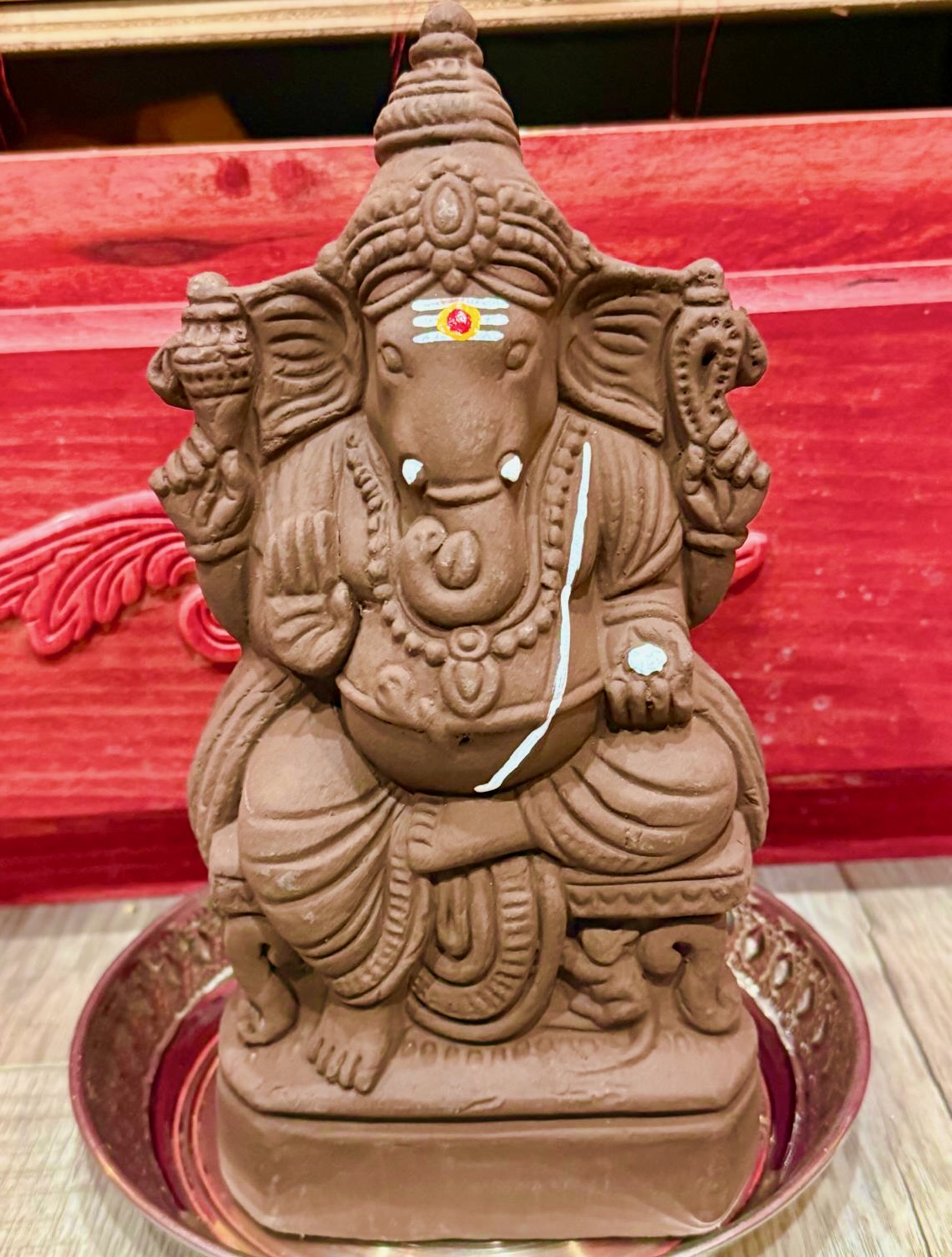
With Ganesh Chaturthi falling on September 14, South Bay families are making their final festival preparations.
At stores across Sunnyvale (GIRI and Swathi’s Indian Market on Apollo Way, Namaste Plaza on Hollenbeck), Ganeshas fill the shelves in many sizes and materials ~ from tiny apartment-friendly murtis to larger clay idols. Nearby Indian groceries offer flowers, coconuts, betel leaves, fruits and ingredients for modaks and kozhakattai.
Families are also trying a more personal alternative: making their own Ganesha. Local clay workshops have invited children and parents to shape eco-friendly idols by hand, turning festival preparation into a lesson in culture and creativity.
When buying an idol, shoppers should ask what it is made from. Natural, unpainted clay is generally the most suitable for a small home immersion. Metal, stone and resin Ganeshas should remain in the home rather than be immersed.
The Sunnyvale Hindu Temple will hold its Ganesh Chaturthi observances on September 14. In homes across the Bay Area, folding tables will become mandapams, apartment kitchens will produce modaks, and grandparents in India may join the puja through video calls.
The surroundings may differ, but the welcome remains familiar: Ganesha always arrives first.
On the go
GIRI: 1214 Apollo Way, Suite 401, Sunnyvale
Swathi Indian Market: 1202 Apollo Way, Sunnyvale, CA 94085
Sunnyvale Hindu Temple: 450 Persian Drive, Sunnyvale
Check an idol’s material and paint before planning immersion.
For much of its 47-year history, South India Fine Arts has brought prominent musicians and dancers to Bay Area audiences. For Lalithakala Vaibhavam, held on August 8 and 9, SIFA looked closer to home.
The inaugural festival featured Bay Area artistes in Bharatanatyam, Carnatic vocal and instrumental music, ensemble presentations and Harikatha. A Carnatic music quiz brought younger rasikas into the proceedings as participants rather than spectators.
With four programmes each day, the schedule also required some practical calculation: which performances to attend, when to meet friends and when exactly one could make the coffee run without missing too much.
A weekend of varied programmes
Saturday opened with Binaries in Bharatanatyam, presented by Sukanya Kumar and team. It was followed by Pancha Tattva, a collaborative dance production by Meenakshi Ganesan and Sudha Krishnan with a live orchestra.
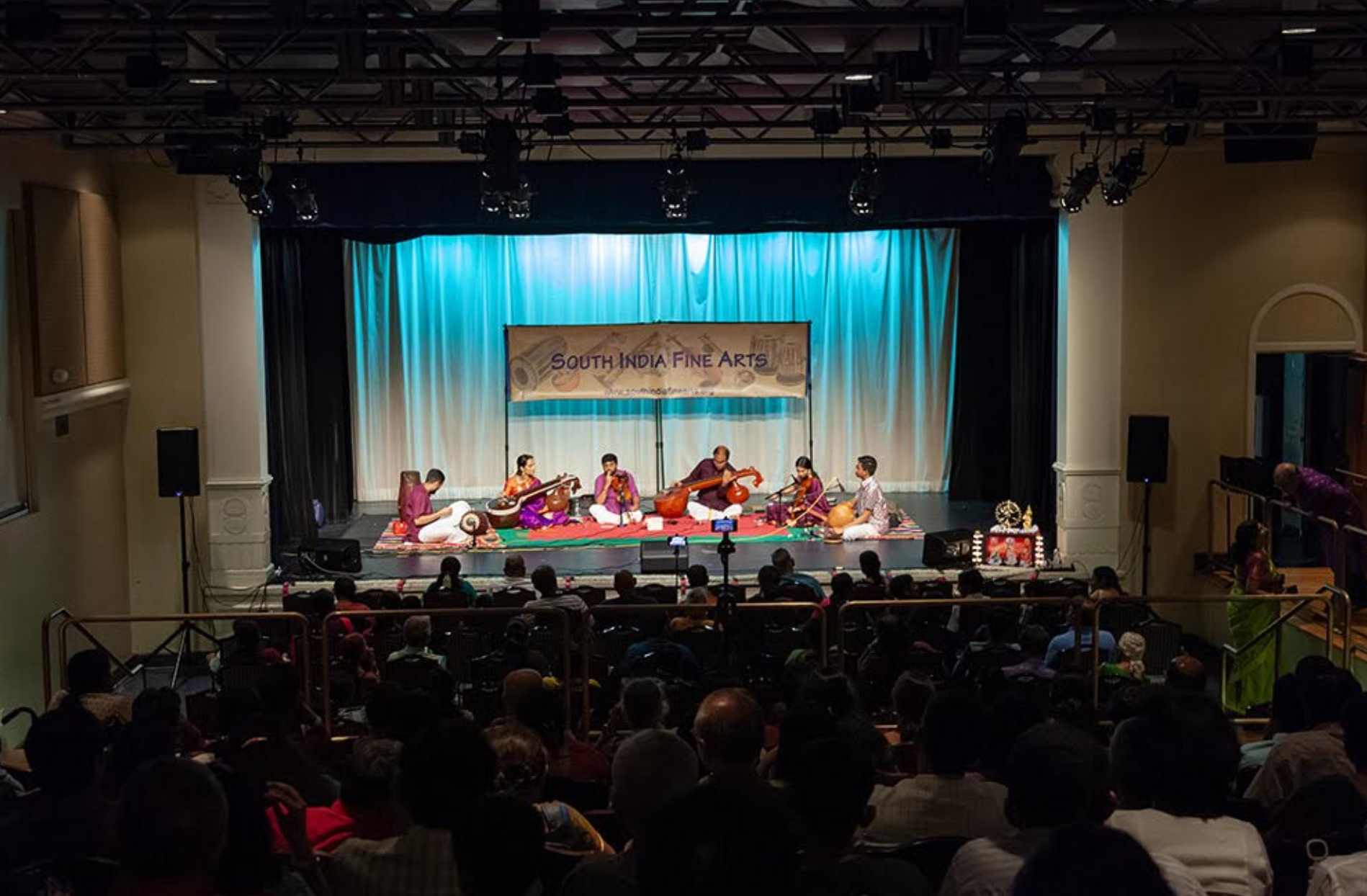
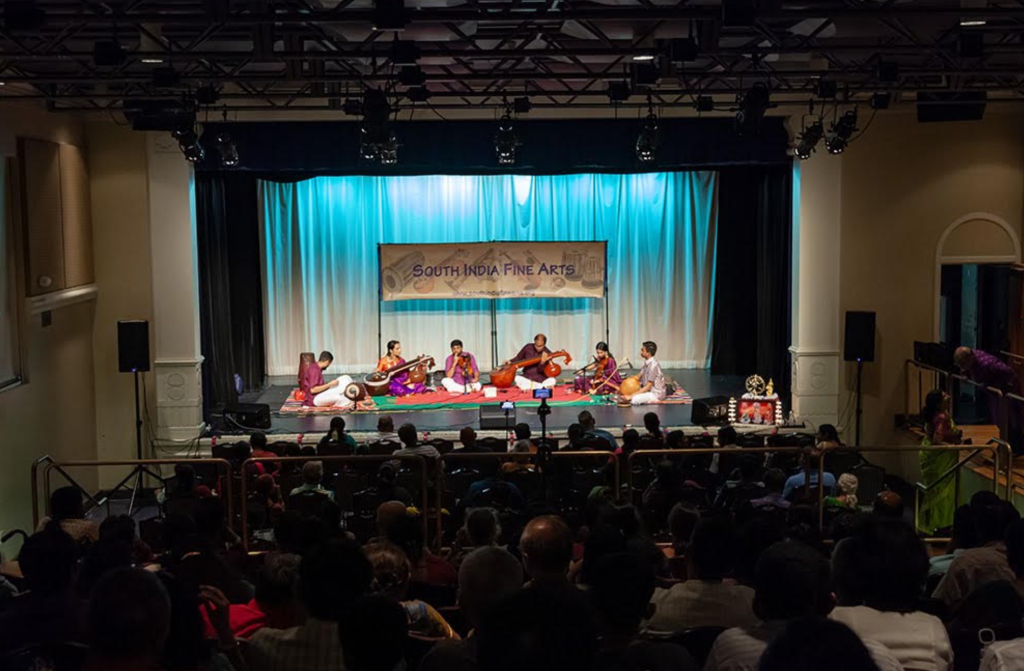
Sindhu Natarajan presented the afternoon vocal concert. Later, Vadhya Vrinda brought Hrishikesh and Priyanka Chary on veena together with Vignesh and Aparna Thyagarajan on violin. The ensemble format placed the emphasis on musical exchange, with the artistes listening and responding to one another.
Vadhya Vrinda brought veena and violin artistes together at the Historic Hoover Theatre. Photograph: Sundar Narayanan.
Sunday began with Sadākṣarī — The Singing Strings, presented by the Trinity School of Music and curated by Anuradha Sridhar. Performing alongside six of her students, Sridhar allowed their individual musical personalities to emerge while maintaining the coherence of the ensemble.
Festival sponsors Sudha Pennathur and Edward Messerly were among those in the audience and T.S. Ranganathan of GIRI, Sunnyvale were in the audience.
All were struck by the lives behind the music. Many of the younger artistes continue to study and practise while pursuing demanding academic and professional careers. Their presence on stage represented years of lessons, rehearsals and careful scheduling around the rest of life.
The morning continued with Glory of Dikshitar, presented by students of the International Academy of Indian Music and curated by Shiv Kumar Bhat and Kasthuri Shivakumar.
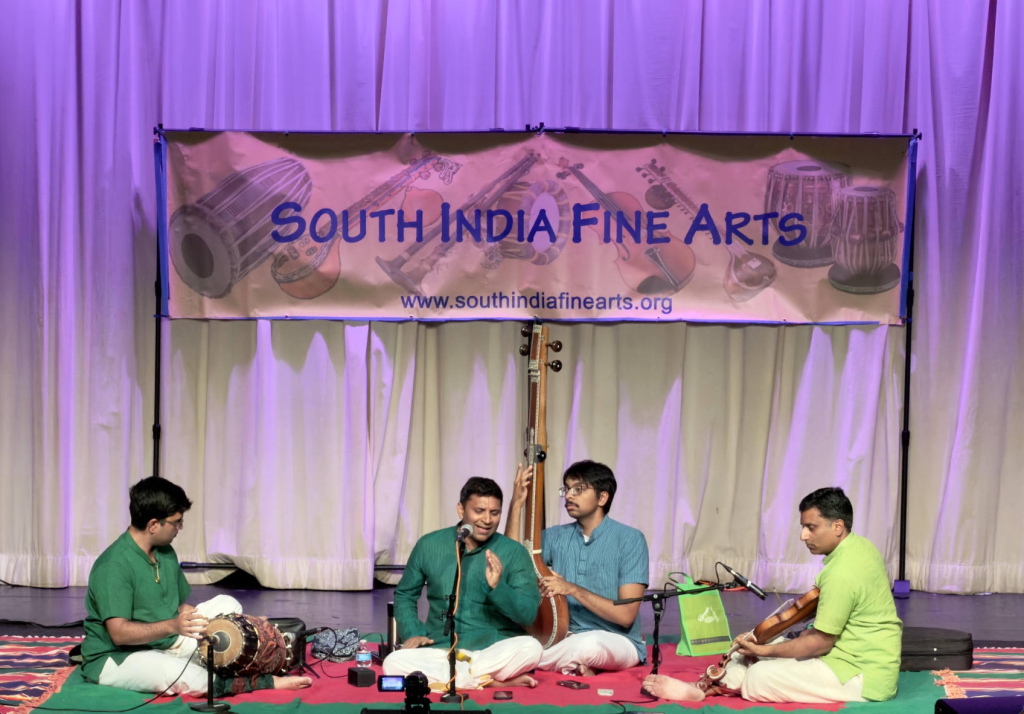
The afternoon vocal concert featured Anil Narasimha, accompanied by his brother Ajay Narasimha on violin, Gopal Ravindhran on mridangam and Karthik Balakrishnan on tambura. The programme included Tattvamariya Tarama, Saketa Nagara Natha, Eti Janmamu and Nikelana. The familiarity between the brothers lent an ease to the musical exchanges, with Ajay’s violin responding closely to Anil’s singing. Gopal provided the rhythmic framework on mridangam.
Anil Narasimha on vocal, with Ajay Narasimha on violin, Gopal Ravindhran on mridangam and Karthik Balakrishnan on tambura. Photograph: Sundar Narayanan.
The festival concluded with Anuradha Suresh’s Harikatha, Narayananey Namakke Parai Tharuvan. The combination of music and storytelling gave the weekend an appropriately conversational close.
When young rasikas became contestants
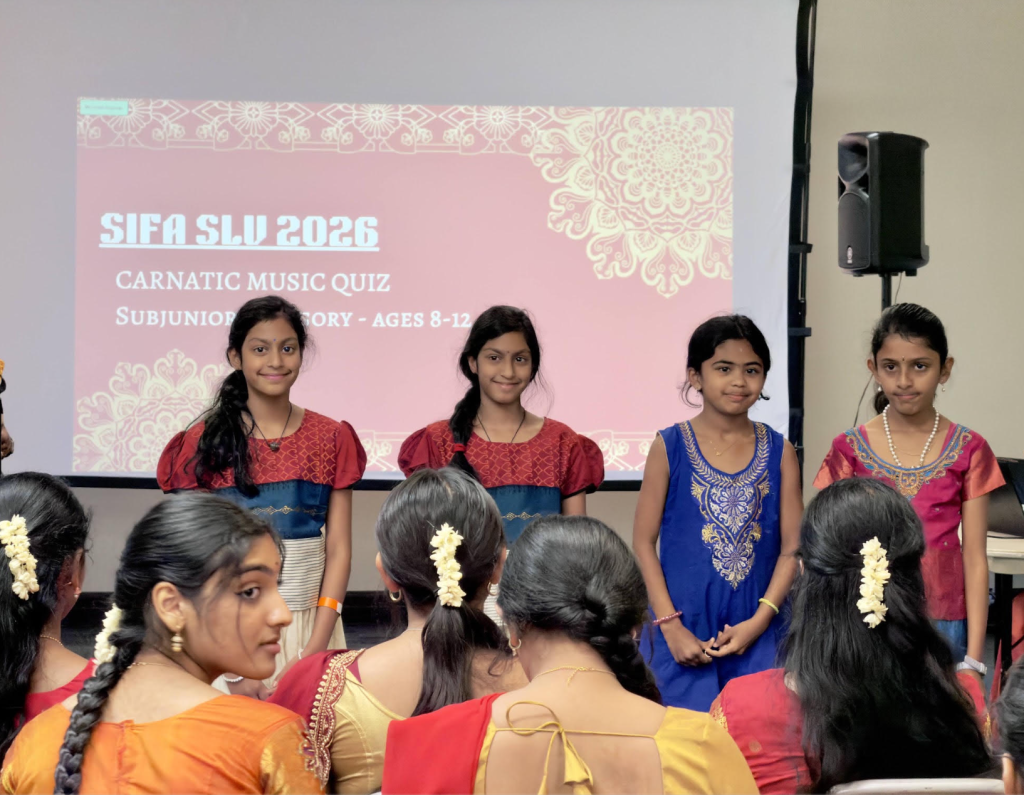
A Carnatic music quiz added a participatory element to the festival, with categories including a sub-junior round for children aged eight to 12.
For a while, the younger members of the community were not simply listening to the arts; they were being asked what they knew about them.
The quiz offered a change of pace between the formal performances and encouraged children to draw upon what they had learned through lessons, concerts and conversations at home. It also confirmed that enthusiasm sometimes reaches the answer a few seconds before certainty does.
Enthusiasm sometimes reaches the answer a few seconds before certainty does.
Young rasikas take part in the sub-junior Carnatic music quiz. Photograph: Sundar Narayanan.
Beyond the programme sheet
Around the theatre, the intervals developed a rhythm of their own. Artistes prepared for their slots, volunteers managed transitions and audience members moved between the hall and lobby. Friends met after months of promising to do so, and discussions about one performance continued as the next group prepared backstage.
Lalithakala Vaibhavam was not a student showcase in the conventional sense. Its participants included young learners, experienced local artistes, teachers and professionals who have continued their artistic practice alongside other careers.
This range allowed audiences to see the teaching networks that have developed across the Bay Area. It also placed artistes from different schools and circles on a common platform.
Sudha Pennathur, and T S Ranganathan, described the younger participants as future custodians of an inherited cultural tradition. Their progress depended not only on continued learning but also on a community willing to listen.
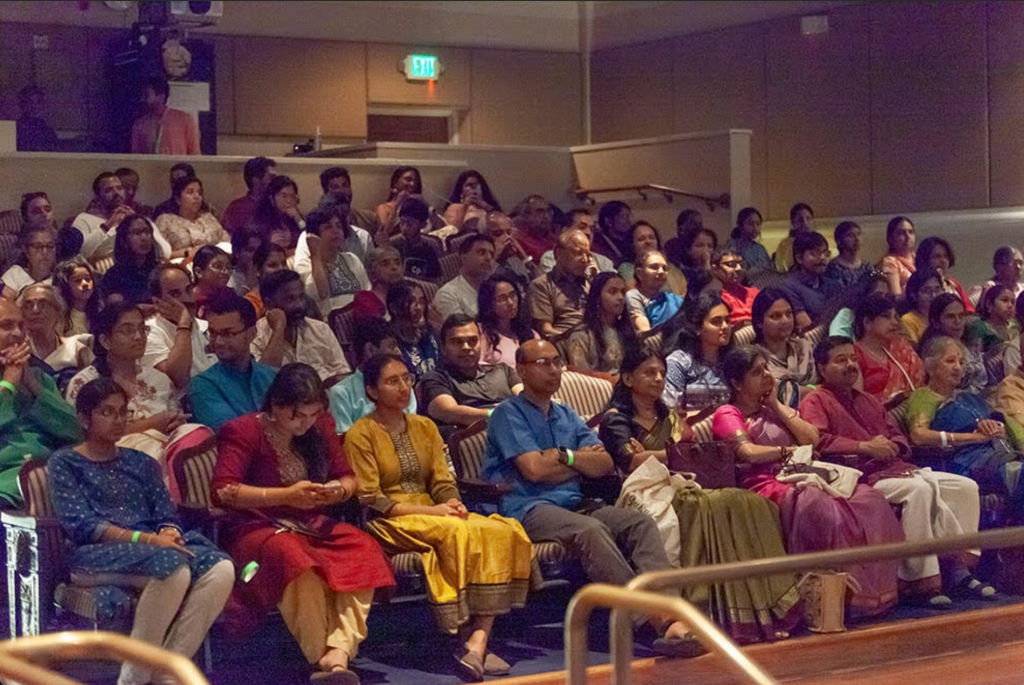
Rasikas at the inaugural Lalithakala Vaibhavam. Photograph: Sundar Narayanan.
A beginning close to home
SIFA has featured local artistes alongside visiting performers over the years. Lalithakala Vaibhavam gave the local community an entire weekend.
Its breadth was its strength, even if the full schedule demanded some planning from audiences. Dance, individual concerts, teacher-student ensembles, instrumental collaboration, storytelling and a quiz all found space within the first edition.
Future editions may change in format and scale. The inaugural festival nevertheless established a clear purpose: to give Bay Area artistes a serious platform and bring them before audiences beyond their immediate schools and social circles.
By Sunday evening, the instruments had been packed and the stage cleared. What remained was a clearer view of the artistes already learning, teaching and performing among us.
Music was part of everyday family life for Shobana Sujitkumar, who grew up in Chennai.
Her athai—her father’s sister—would seat her on her lap and recite the Narayaneeyam, pasurams and other devotional verses. By the age of three, Shobana could recite Bhaja Govindam.
She was drawn not only to Carnatic music but also to listening to different artists and their interpretations. “Rangapura Vihara” was a household song; attending kutcheris became a regular part of her life.
Marriage opened a new chapter in her musical journey, with her husband and his family encouraging her to continue her passion. When she moved to the United States in 1995, her suitcase was filled with Carnatic music cassettes. She still has tapes her husband bought for her that year, with recordings of M.S. Subbulakshmi among her favourites.
From house concerts to SR Fine Arts
In the Bay Area, Shobana’s childhood friend Kanaka Guruprasad, knowing her passion and love for the art form, introduced her to Pat and Godha Krishnan, who started house concerts for Ramanavami, in a 3-day festival format from 2006, at their residence. There was little social media then. Invitations travelled personally, and guests arrived carrying a homemade dish.
“You made a dish and went,” Shobana recalls.
Thiruppavai programmes and concerts took place in people’s homes. At these gatherings, Shobana noticed how many children in the community were learning music seriously—and how few opportunities they had to perform.
That observation eventually led her to establish Sri Ranga Ramanuja Maha Desikan Fine Arts, better known as SR Fine Arts, in 2012. The organisation was inaugurated by Anuradha Sridhar, with Anirudh Venkatesh as its inaugural performer. Its first concert was presented by Hrishikesh Chary.
SR Fine Arts became a nonprofit in 2014. That December, Shobana also started Krishnageetham Performing Arts, a dance branch named for her parents, Krishnan and Geetha.
She credits five young musicians with inspiring the organisation’s early journey: Ashwin Srikant, Guhan Venkataraman, Hrishikesh Chary, Vignesh Thyagarajan, Vignesh Venkataraman.
What was extremely important was ~ the many Gurus within the Bay Area’s artistic ecosystem who embraced S R Fine Arts and have remained steadfast supporters over the years. One early example was from senior Bay Area vainika and guru Srikanth Chary: daughter-disciple Priyanka presented her first full-length concert through SR Fine Arts, which he called, her Arangetram. Several students from his school, Nadanidhi, have since presented Arangetrams through the organisation. Shobana remains deeply grateful to him and the wider community of Gurus whose trust, encouragement and continued support have been integral to SR Fine Arts’ journey.
Experimenting with the concert format
SR Fine Arts began with a youth festival. But defining “youth” proved unexpectedly complicated: should the age limit be 21, 25 or something else?
The event eventually became Sangeethotsavam, welcoming performers from across North America. Today, applicants may wait between six months and a year for a performance opportunity.
The organisation has also experimented with concert lengths, offering formats ranging from one to three hours. Ashwin Srikanth was the first to present a three-hour concert.
That experiment confirmed that musical enthusiasm may be abundant, but three-and-a-half hours still requires considerable staying power. The longest format was subsequently reduced to three hours.
In 2018, SR Fine Arts introduced Yuvatarangini for young artists preparing to leave for college. It gives them an opportunity to present a solo or duet before academic schedules take over. What began with five performance slots has expanded to seven because of demand.
The organisation has also presented thematic programmes and formats pairing senior artists with junior accompanists.
“We keep experimenting.”
The work behind the stage
One of Shobana’s early challenges was audio. In the beginning, parents with technical knowledge stepped in to help. She later purchased equipment from Guitar Center, and SR Fine Arts now works with a regular audio professional.
Anyone who has organised a community concert knows that the microphone cable can generate almost as much tension as the main performance.
Shobana also speaks openly about attendance for concerts in the local music community. With many schools and organisations presenting events, concerts frequently clash. Attendance can become reciprocal: one family attends another child’s concert with the expectation that the gesture will be returned.
She hopes families will listen more widely and support musicians outside their immediate schools and social circles. For students, she believes, attending concerts is an essential part of learning.
Shobana says she began SR Fine Arts because she enjoyed the work and wanted to create opportunities for emerging performers.
Outside music, Shobana’s love of sarees led her to support weavers during the pandemic. In 2020, she started Thaayaar Silks, named for Ranganayaki Thaayaar.
More than a decade after SR Fine Arts began, applications, scheduling and production are largely handled by Shobana herself. The audience sees the finished kutcheri; she sees the emails, forms, sound checks and last-minute adjustments that made it possible.
But the purpose remains simple: the Bay Area has talented young musicians, and they need places where they can be heard. More than a decade later, Shobana’s purpose remains unchanged: to give young musicians a platform, and the experience that comes with using it.
At 7.20 on a Sunday morning, the dining room at Mylapore Sunnyvale was already filling up.
My husband, our 12-year-old son, my parents-in-law and I had booked the first batch of its Rayar’s Mess-style breakfast experience. The meal was scheduled to begin at 7.30 a.m., but nearly everyone had arrived at the stipulated time.
Jay Jayaraman at Mylapore Sunnyvale during its Rayar’s Mess-inspired breakfast. Photograph: Jaishree Viswanathan.
A simple idea, carefully organised
Rayar’s Mess in Chennai is known for its compact space, simple menu and steady stream of diners. Its lack of conventional ambience is almost part of its identity: people go for the food, accept the setting and leave satisfied.
The Sunnyvale version retained the simplicity of the meal but placed it within a more comfortable and carefully managed dining experience.
Four batches were scheduled through the morning, each limited to 50 people. Our 7.30 session ended at 8.15, allowing the staff to reset the tables before the next group began dining at 8.30.
The unlimited menu included idli, medhu vadai, pongal, getti chutney, spicy chutney, idly, sambar, kasi halwa and filter coffee.
Service moved remarkably smoothly. Plates were replenished without fuss, and the staff seemed to know when a table needed more food.
Mylapore founder Jay Jayaraman briefed his crew as the first batch began and then moved among the tables. He checked whether guests had eaten enough, much like a host at a kalyana saapadu. Anu Ganesh, the Mylapore Atlanta host, did the same.
The comparison was fitting. At a wedding meal, the host’s question is rarely a neutral “Would you like more?” It generally means, “Why have you stopped eating, and what can we do about it?”
Vadai, halwa and the matter of value
The medhu vadai was a highlight — crisp, hot and deserving of a second round. The pongal and sambar were comforting, while the kasi halwa supplied an emphatic yum finish.
The unlimited format worked without feeling hurried or excessive.
Children below six were admitted free.
But this was not simply a plate of idli and vadai. It was a limited-capacity event, advance preparation, table service, an unlimited menu and the attempt to recreate a particular style of Chennai breakfast in Sunnyvale.
Getting up early was part of that occasion. It reminded me of family journeys from Chennai to Tirupati, when we would leave home at an early hour but look forward to stopping en route for an excellent breakfast.
A Rayar’s Mess-inspired menu was served continuously during breakfast session at Mylapore Sunnyvale. Photograph: Jaishree Viswanathan.
Some meals become memorable partly because one has made a small mission of reaching them.
Four batches. Fifty people each. Forty-five minutes.
How the idea travelled
Jayaraman explained that the original Rayar’s Mess has been serving diners for nearly a century.
“The line is always there, and the service is always there,” he said. The menu is simple, and customers can watch the batter being ground and the idlis and vadais being prepared.
At the Chennai mess, he explained, there is no conventional ordering system. Food keeps arriving, and the staff determine the bill by asking diners what they ate.
The Sunnyvale solution was to make the meal unlimited and organise it through timed reservations.
It was a practical adaptation. The spirit came from Chennai; the booking system was unmistakably Californian.
The original is celebrated for taste rather than comfort. Mylapore Sunnyvale offered something different: familiar Chennai food within the ease of a spacious restaurant, with assigned batches and an orderly flow of service.
It was, in that sense, the best of both worlds — remembering Rayar’s Mess, but designed for the community here.
Coffee — and a young admirer
At the end of the meal, guests rose from their tables and collected filter coffee from the counter. The arrangement allowed the staff to begin clearing the room while diners stood nearby and continued their conversations.
Filter coffee is prepared at the counter as the breakfast session draws to a close. Photograph: Jaishree Viswanathan.
Nobody appeared particularly eager to rush away.
One guest I spoke with said she had thoroughly enjoyed the experience. Around us, families compared favourites and watched the room being prepared for the next batch.
A kid, meanwhile, recognised Jay Jayaraman from the event publicity. He shyly admitted that he could not believe he was speaking to the entrepreneur himself and asked for a photograph to show in school.
For him, the morning acquired its own celebrity encounter.
By 8.15, our batch was finished. The next group was gathering, the tables were being reset and another 50 people were preparing for their turn.
We would return. Mylapore Sunnyvale has established itself as a dependable comfort-food destination, and the special breakfast built on that trust.
For 45 minutes, with the Suprabhatam in the background, crisp vadais on the plate and coffee waiting at the counter, I could close my eyes and imagine myself being within walking distance of the Kapali temple.
Story and photographs by Jaishree Viswanathan.
Disclosure: The writer paid for her family’s meal. Mylapore Sunnyvale did not invite her or receive advance notice that she would be writing about the experience.